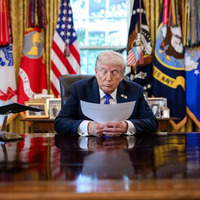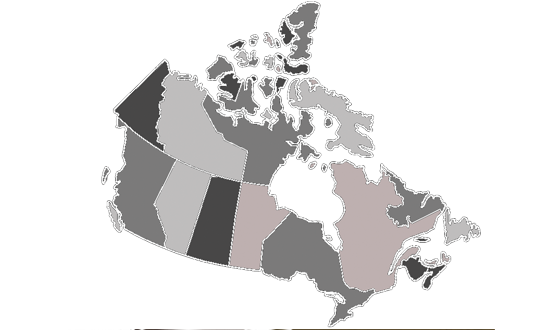


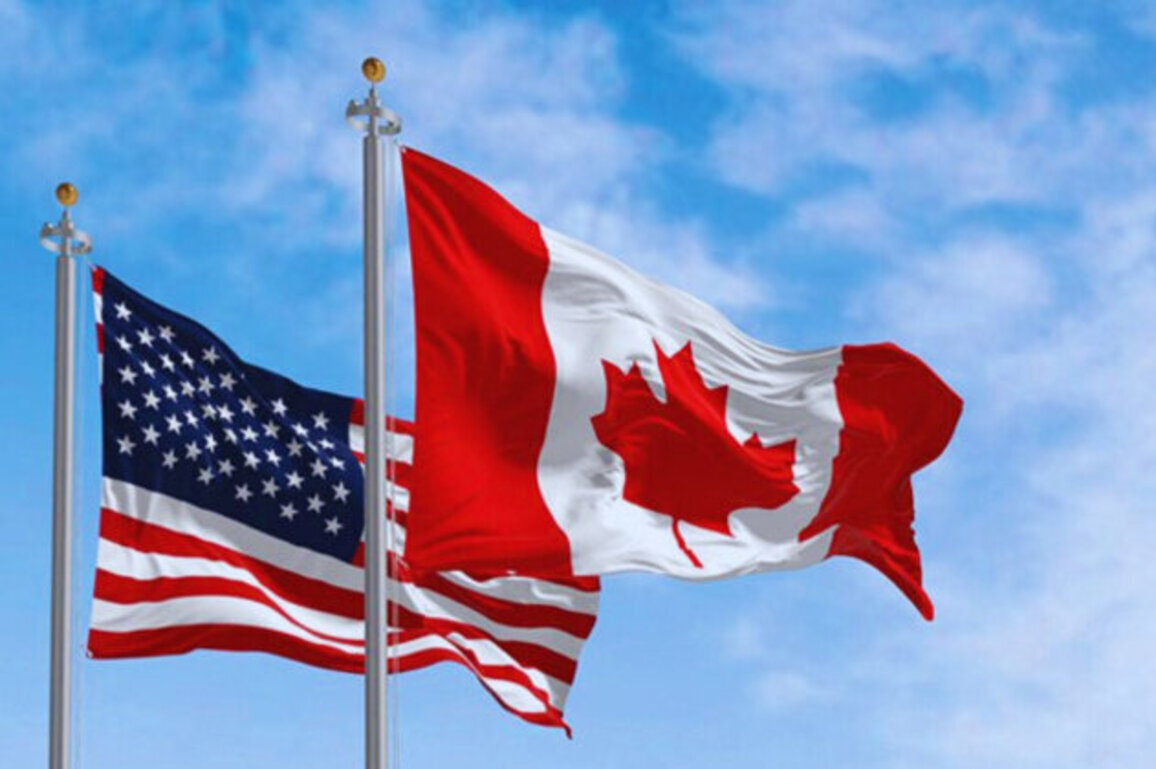
The Pentagon has suspended US participation in a longstanding joint defense body with Canada, escalating tensions between the two allies as the Trump administration accuses Ottawa of failing to meet military spending commitments.
US Undersecretary of War Elbridge Colby announced that Washington is ?pausing? its role in the Permanent Joint Board on Defense, a bilateral advisory structure on continental security cooperation created in 1940 during the early stages of World War II.
In a series of statements posted on X, Colby argued that Canada has not shown sufficient progress in strengthening its defense capabilities. ?Only by investing in our own defense capabilities will Americans and Canadians be safe, secure, and prosperous,? he wrote, adding that Canada had failed ?to make credible progress on its defense commitments.?
The move comes amid broader strains in relations between the two countries under President Donald Trump's second term, including disputes over trade, defense burdens within NATO, and Trump's repeated remarks suggesting Canada should become the ?51st state.?
Colby also appeared to reference Prime Minister Mark Carney's recent emphasis on diversifying alliances beyond the United States. Sharing remarks linked to Carney's speech at the World Economic Forum in Davos, Colby wrote: ?We can no longer avoid the gaps between rhetoric and reality. Real powers must sustain our rhetoric with shared defense and security responsibilities.?
The Permanent Joint Board on Defense consists of senior military, diplomatic, and civilian officials from both countries and has long served as a symbolic and strategic channel for cooperation on North American defense policy. The last publicly reported meeting took place in Ottawa in November 2024, before Trump returned to office.
The board was established by President Franklin D. Roosevelt and Canadian Prime Minister William Lyon Mackenzie King under what became known as the Ogdensburg Agreement. Over the decades, it played a central role in shaping continental defense coordination, including work connected to NORAD, Arctic security, radar early-warning systems, and even strategic infrastructure projects such as the St. Lawrence Seaway.
Defense analysts and former officials reacted critically to the US decision. Imran Bayoumi, a former American defense adviser now affiliated with the Scowcroft Center for Strategy and Security, described the move as ?a needless provocation that sends the wrong message to Ottawa and other US allies.?
Former Canadian MP John McKay, who previously co-chaired the board, warned the suspension could complicate ongoing cooperation on NORAD modernization, Arctic defense coordination, and future Canadian procurement of US-made F-35 fighter jets. ?I?m disappointed. I think it's short-sighted. I think it's foolish, but I?m not surprised,? he said.
McKay also questioned whether suspending one of the most important defense coordination mechanisms between the two countries would provide Washington with leverage in broader trade or military negotiations.
Artur Wilczynski, a former Canadian diplomat involved in the board's work, argued that reduced coordination would affect both countries, calling the move a ?bizarre decision.?
Sean Maloney, a military historian at the Royal Military College, said the board performs substantial behind-the-scenes planning work and warned that the US withdrawal would create unnecessary friction at a sensitive moment. At the same time, he suggested day-to-day military operations between the two countries would likely continue unaffected because of the practical necessity of maintaining cooperation.
Canada's government responded by highlighting recent increases in military spending. Defense Minister David McGuinty pointed to investments in northern defense, under-ice submarines, and broader modernization of the Canadian Armed Forces. He said Canada would continue working with ?trusted partners who are ready to work with us,? while remaining open to discussions on strengthening continental security.
For years, Canada faced criticism for failing to meet NATO's benchmark of spending 2% of GDP on defense. Ottawa finally reached that threshold after a multibillion-dollar increase in military funding. NATO members, however, later agreed to raise defense spending targets further to 5% of GDP by 2035, including direct military expenditures and infrastructure investment.
Colby referenced those commitments in a separate post featuring US Ambassador to Canada Pete Hoekstra, stating that Washington is working to ensure all NATO allies, including Canada, reach the alliance's new targets, which he described as essential for North American and Arctic defense.
The decision also reflects broader shifts in US relations with Western allies under Trump's administration. The Pentagon recently announced reductions in planned troop deployments to Europe, including changes affecting Poland and Germany, following Trump's criticism of NATO partners over their support levels in conflicts involving the US and Israel.
Republican Congressman Don Bacon criticized the administration's handling of relations with Canada, arguing that inflammatory rhetoric had damaged ties between the neighboring countries. Referring to Trump's repeated comments about Canada becoming part of the United States, Bacon wrote that the insults had generated ?nothing but animosity that cost us economically and now militarily.?